Water Damage Restoration O'Fallon, MO
24/7 water damage restoration in O'Fallon, MO. The restoration team extracts standing water, dries the structure to the IICRC S500 standard and documents every step for your insurance claim.
(888) 603-7319Get the O'Fallon dry-out moving now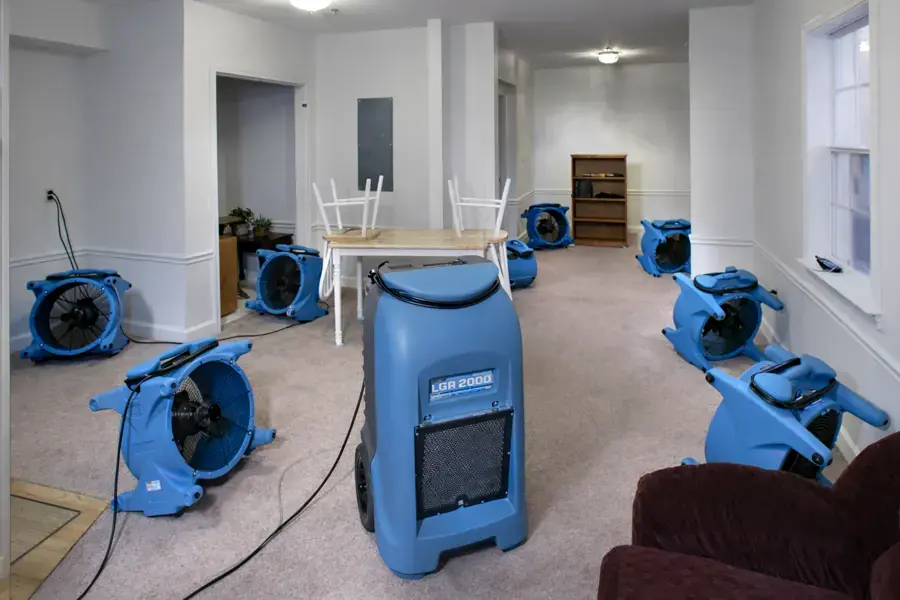
What to do while the water is still moving
Five steps for the first hour, in the order that protects people first and the house second.
Shut the water off
The main valve is usually in the basement where the line comes through the wall.
Cut power to wet areas
Switch off breakers for wet rooms, only if the panel itself is dry.
Stay out of water near outlets
Water around cords, a furnace or a water heater can be energized.
Photograph before moving anything
Timestamped photos of every wet area start the claim file.
Lift rugs, then call
Mold can start inside 24 to 48 hours, so drying should start right away.
Water Damage Restoration Services in O'Fallon, MO
Water and sewage only, from the first extraction to the last moisture reading. Basements come first here, because that is where most O'Fallon water ends up.
 The O'Fallon basementBasement Flooding CleanupFinished basements pumped out, carpet and pad handled, walls dried from the cove joint up.See the service
 When the pit overflowsSump Pump Failure CleanupA dead pump, a stuck float or a power outage in a spring storm, cleaned up and dried.See the service
 Water Extraction & RemovalTruck-mounted extraction pulls standing water first, before any drying starts.See the service
 Window Well Flooding CleanupWells that fill in a downpour and pour through the basement window, dried out.See the service
 Sewage Backup CleanupFloor drain and toilet backups handled as Category 3, with porous materials removed.See the service
 Burst Pipe CleanupSplit supply lines, failed PEX fittings and old polybutylene, dried inside the walls.See the service
 Frozen Pipe CleanupGarage, crawl space and outside-wall lines that split in a January cold snap.See the service
 Ceiling Leak Water DamageUpstairs bath, tub and supply leaks traced and the ceiling dried safely.See the service
 Roof Leak Water DamageHail, wind and flashing leaks dried from the attic decking down to the drywall.See the service
 Flash Flood & Creek Flooding CleanupStorm runoff and creek water near Dardenne, Peruque and Belleau Creeks cleaned out.See the service
 Water Heater Failure CleanupBasement tank failures extracted before the water reaches finished rooms.See the service
 Washer & Appliance Leak CleanupWasher hoses, ice maker lines and dishwashers, dried under the cabinets too.See the service
 Structural Drying & DehumidificationFraming, subfloor and slab dried to readings, not to a date on the calendar.See the service
 Commercial Water DamageOffices, shops and restaurants along Highway K and I-70 dried with the doors open.See the service
Water damage dried to the IICRC S500 standard
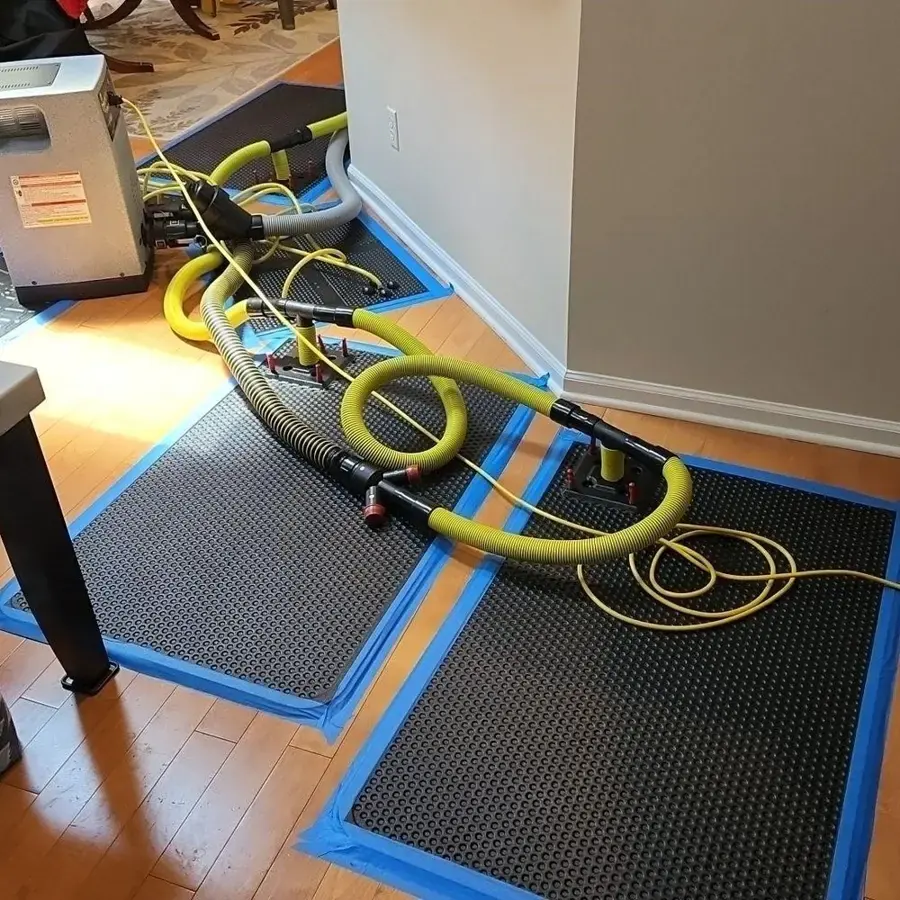
Structural drying, not just surface drying. The equipment stays until the readings say dry, not until the room looks dry.
Moisture mapping
The tech who does the walkthrough maps wet materials with meters and thermal imaging before any equipment goes down.
Extraction
The extraction crew pulls standing water with truck-mounted equipment so it leaves the building.
Air movers and LGR
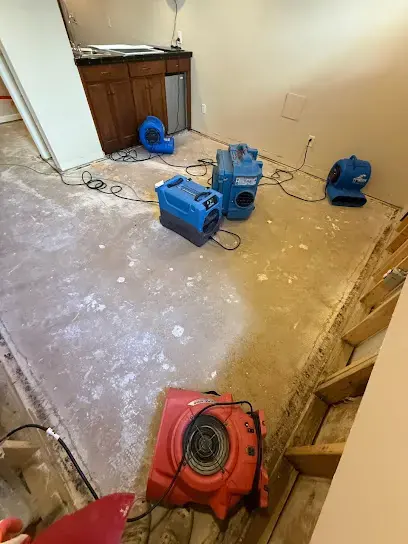
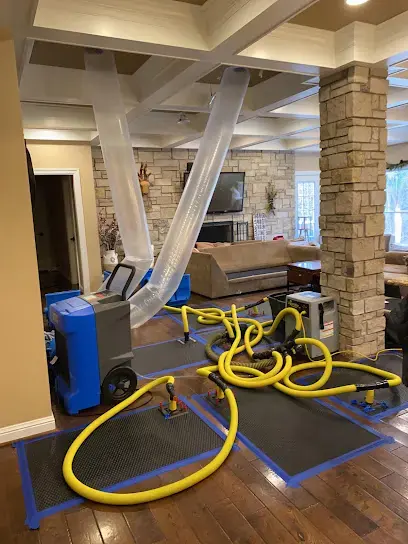
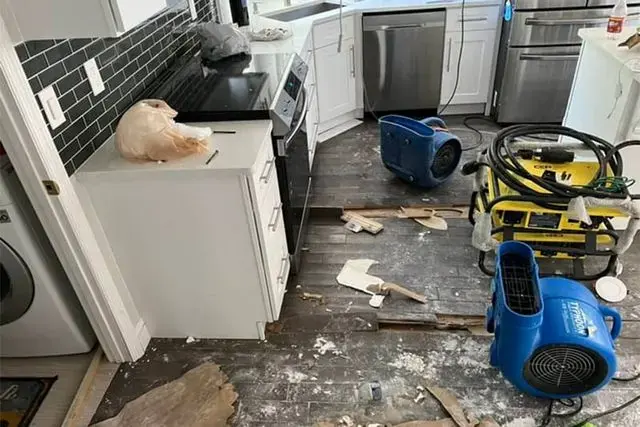
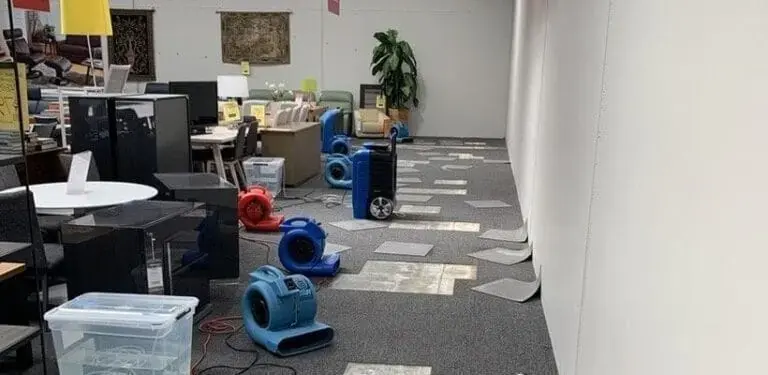
Air movers are set to each room and LGR dehumidifiers pull the moisture back out of the air.
Dry verification
Daily readings continue until wet materials sit within 2 to 4 points of a dry reference.
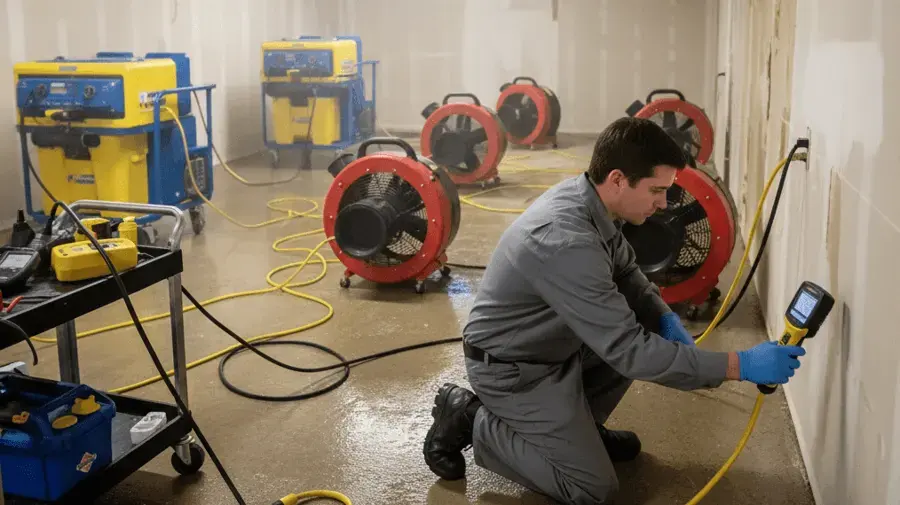
The drying goal
The drying team measures a dry reference material of the same kind in an unaffected room. Equipment comes out when the wet material reads within 2 to 4 points of it.
The gear a real dry-out runs on
- Truck-mounted extraction
- LGR dehumidifiers
- Desiccants for Class 4 materials
- Air movers
- Thermal imaging
- Pinless moisture meters
- HEPA air scrubbers
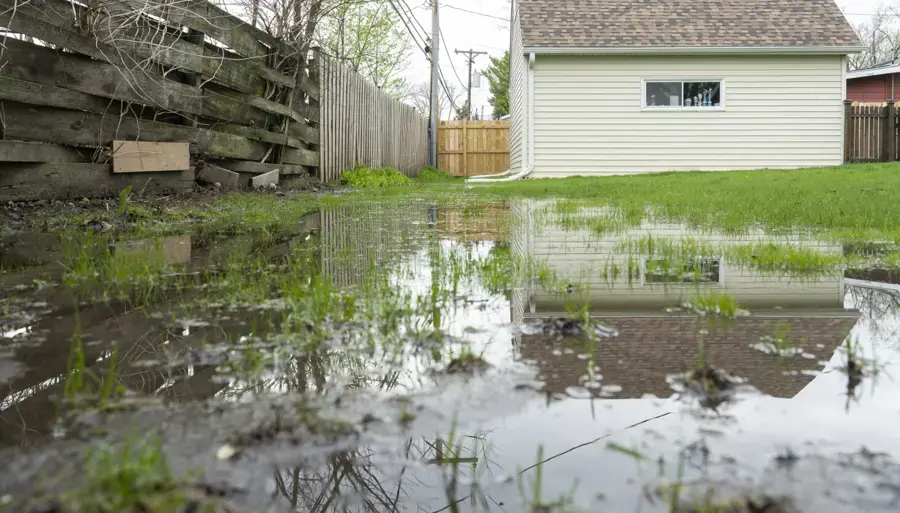
When Dardenne Creek and Peruque Creek rise
Storm water is the other half of water damage in O'Fallon. It arrives over the ground from the creeks and through the ground from saturated clay.
- Dardenne Creek, Peruque Creek and Belleau Creek carry the city's storm runoff through low streets and backyards.
- St. Charles County sits between the Missouri and Mississippi Rivers, and the Great Flood of 1993 hit it hard.
- The record July 2022 rain in the St. Louis region flooded low streets and basements across the area.
Why O'Fallon homes call the restoration team first
A finished dry-out follows what is actually wet, not what looks wet.
Rapid local response
Crews head out across Old Town, WingHaven and the Highway K and Highway N corridors, at night and on weekends.
IICRC S500 drying standard
Drying follows the industry standard, from the water category to the final reading.
Claim-ready documentation
Moisture maps, daily logs and timestamped photos go into a file an adjuster can follow.
St. Charles County water experts
Sump failures, window wells, floor drain backups and frozen lines are the everyday work here.
All water damage categories covered in O'Fallon, MO
Category 1, 2 and 3 water are handled differently.
Category 1, clean water
Supply lines, burst pipes and water heaters. Dried in place when caught early.
Category 2, gray water
Sump overflow, window wells, washer drains. Soaked materials are cleaned or removed.
Category 3, black water
Sewage, floor drain backups and creek floodwater. Porous materials get removed, not dried.
Sewage backup cleanupWhat does water damage restoration cost in O'Fallon, MO?
In O'Fallon, MO, water damage restoration typically runs $1,200 to $12,000 or more. The drivers are the water category (clean, gray or black), how many square feet got wet, the material class and how fast drying started.
Contained, clean water
- One or two rooms
- Extraction and drying in place
- Daily moisture readings
Finished basement
- Pad removed, flood cuts made
- Several LGR dehumidifiers
- Slab and framing dried
Sewage or floodwater
- Category 3 protocol
- Containment and HEPA air scrubbers
- Porous materials removed
These are typical ranges, not a quote. For a closer planning number, use the water damage cost calculator.
Documentation for your insurance claim
A water claim is decided on the file, not on the phone call. A complete file from the restoration contractor who responds carries:
- The moisture map from day one
- Daily psychrometric logs and moisture readings
- Timestamped photos taken before any demolition
- The category and class of the loss
- A line-item scope in the format adjusters expect
Sudden and accidental, backup or flood
A burst supply line is usually treated differently from sump overflow, a sewer backup or rising surface water. Many Missouri policies cover backups only with a water backup endorsement, and flooding needs a flood policy. Coverage depends on your policy, so it is worth checking with your own insurer.
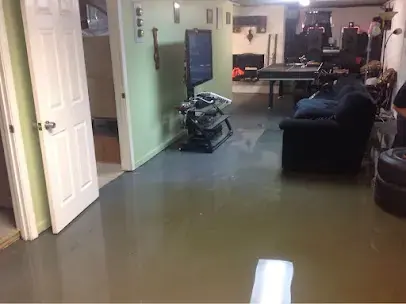
What a water damage dry-out looks like in O'Fallon

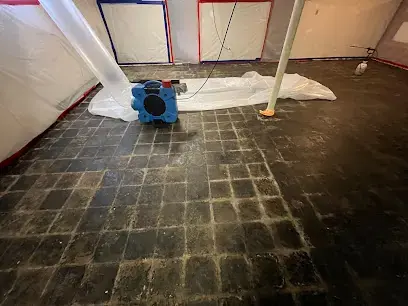
Water damage restoration across O'Fallon and St. Charles County
The O'Fallon restoration crew covers the city and the surrounding ZIP code areas 63366 and 63368, from Old Town to WingHaven.
One call reaches O'Fallon water damage pros, 24/7
Water damage in O'Fallon rarely waits for business hours. Describe which level of the house is wet and where the water came from, and the drying team loads the extraction and drying equipment that job needs.
(888) 603-7319Old Town to WingHaven, get water out todayOld Town and Main Street
Main Street, Civic Park, Tom Ginnever Avenue and the older frame houses near the rail line, where crawl spaces and aging drain lines sit beside newer infill.
I-70 and the Highway K corridor
Highway K, Mexico Road, Veterans Memorial Parkway and the subdivisions around Fort Zumwalt Park, most of them on full basements with sump pits.
WingHaven and Highway N
WingHaven, Highway N, Bryan Road and the Highway 364 side of 63368, with newer basements, walkouts and second-floor laundry rooms.
Creek-side streets
Copperfield, Belleau Creek Road, Westhoff Park and the low ground along Dardenne Creek and Peruque Creek, where heavy summer rain backs up fast.
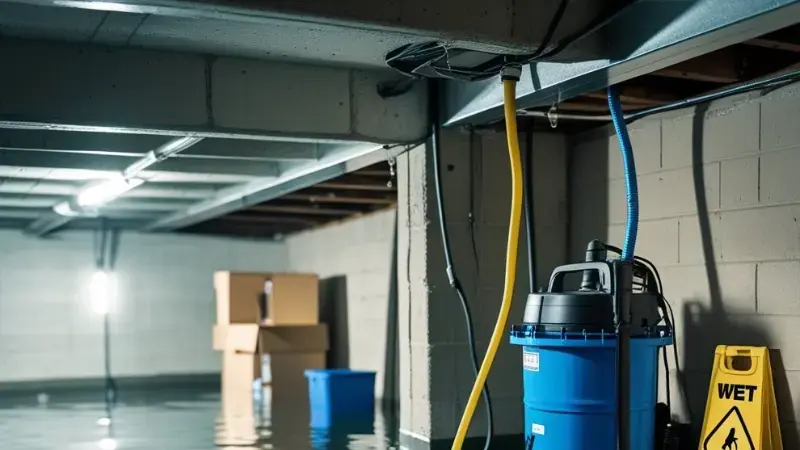
Water damage in O'Fallon, MO: the local risk profile
O'Fallon grew fast from the mid 1980s on, and many of its houses sit on full basements cut into clay soil. That shapes the losses the drying team sees most.
- Sump pumps that fail or fall behind in long spring rains, often with the power out.
- Clay soil that pushes groundwater through the cove joint and fills window wells.
- Floor drains that back up when sanitary sewers surcharge in heavy storms.
- Supply lines in outside walls and garages that split in January cold snaps.
O'Fallon water damage questions
How fast can someone respond to water damage in O'Fallon?
The restoration team dispatches around the clock across O'Fallon and St. Charles County, and emergency water calls are treated as urgent at any hour. Water keeps spreading while it sits, so the first call matters more than the first repair.
What should I do first while the water is still spreading?
If it is safe, shut the water off at the main and cut power to wet areas at the breaker, but only if the panel is dry. Stay out of standing water near outlets, lift rugs and belongings, photograph everything, then call.
Why do so many O'Fallon basements take on water?
Most houses here sit on full basements, and the clay soil around St. Charles County foundations holds water after heavy rain. When a sump pump fails, a window well fills or a floor drain backs up, the basement is where the water ends up.
Is water damage covered by insurance in Missouri?
A sudden and accidental loss, like a burst supply line, is often treated differently from surface flooding, sump overflow or a sewer backup, which may need a flood policy or a water backup endorsement. Coverage depends on your policy, so it is worth checking with your own insurer.
How long does drying take?
A contained Class 1 or 2 loss usually dries in three to five days. Hardwood, plaster and a concrete basement slab take longer. Equipment comes out when the readings reach the drying goal, not on a set date.
What is the IICRC S500?
IICRC S500 is the industry standard for professional water damage restoration. It sets out how water is categorized, how drying equipment is sized and how a structure is confirmed dry.
Does drywall always have to come out?
No. Clean water caught early can often be dried in place. Drywall that is saturated, has wet insulation behind it or was touched by sewage or floodwater is cut out above the highest wet reading.
What is the difference between mitigation and repair?
Mitigation stops the damage: extraction, removal of ruined materials and drying. Repair, such as new drywall, carpet or flooring, is a separate phase that starts once the structure reads dry.
Water in your O'Fallon home right now?
The O'Fallon restoration crew extracts the water, dries the structure to the IICRC S500 standard and documents every step for the claim.